
Dress Material- Designer Unstitched Suits to Rock the Party


Many women prefer to buy an unstitched suit piece instead of buying a readymade garment. These unstitched suit pieces are often handed over to an expert tailor to stitch garments that are trendy, fitting and customized according to the wearer’s specifications. This is a popular trend in countries like India, Pakistan and Bangladesh where retail has made inroads quite in the past two decades and many people still rely on their local tailors to stitch fashionable and contemporary salwar kameez suits, Anarkali suits, lehenga cholis and Kurtis. Read further to know more.


Common Unstitched Suit Piece Fabrics

A wide range of popular fabrics are sold as Dress Material to be stitched by an expert tailor as per the specifications of the buyer. Further details about these sought after fabrics are listed below.

Chiffon

• Chiffon is a common fabric used to stitch salwar kameez ensembles. This fabric is a lightweight material weaved from delicate crepe yarns.


• Chiffon is generally made from cotton, silk.

• Chiffon is a delicate fabric and easily rips or bunches up while sewing which is why chiffon garments are best sewed by expert tailors.

Silk

• Silk is one of the most sought after fabric for Indian salwar suit. This fabric is sought after for its luxurious feel and high sheen aesthetic appeal.


• Silk is used to stitch a wide range of garments such as salwars suits, kurtis and anarkali suits.

Cotton


• Cotton is one of the most sought after fabric for ethnic summer wear for women. Many women buy unstitched cotton suit pieces and have them stitched for comfortable summer wear.
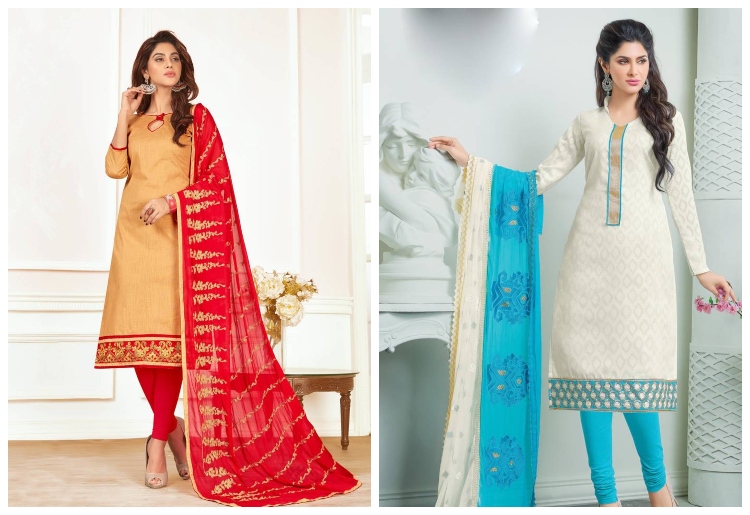
• Cotton is most suitable for the Indian climatic conditions as it keeps the wearer cool and easily absorbs sweat.

Georgette
• Georgette is a high sheen fabric that is mainly used to stitch women’s wear.


• Georgette is a popular fabric preferred by Indian women for ethnic garments like salwar suits of all variations.

Garments Stitched from Unstitched Suit Pieces

A wide range of garments can be stitched from unstitched suit pieces. These garments are mostly of Indian ethnic variations and include women’s wear garments like kurtis, lehenga cholis, salwar kameez suits and anarkali suits. Women prefer unstitched suit pieces for a wide range of reasons. Read further to know more about the advantages of buying unstitched dress fabrics.

Advantages of Buying Unstitched Dress Fabrics

There are many advantages to buying unstitched dress materials and having them stitched by an expert tailor. Some of the most prominent advantages of this practice are listed below.

• One can have an outfit of one’s choice with a particular fabric of one’s choice by simply going for an unstitched suit piece instead of spending time searching for the garment you need stitched with the fabric you need.

• One can insure that they enjoy a well fitted garment by having an unstitched dress fabric stitched in to a garment according to one’s exact size specifications.

Comments

Popular posts from this blog

Top 5 Neck Designs For Kurtis With Collar

Kurti being the most preferred inherited wear for the Indian women has now modified a lot. With another collar patterns, one can enhance its look to a remarkable degree and glam up its regular look. Be it short Kurti, long Kurti or a mid-length one, there are several types of neck ornaments which one can travel with! Let's examine out unusual of the best neck procedures for kurtis here Kurtis is always seen as all-time wear for women of all age groups. Modern collared neck treatments for Kurtis can be drawn up with pants, leggings, jeggings, and even denim to create a modern, fashionable look! Collar neck designs have changed the way people looked at kurtis. Now from Shirt collar to Chinese collar, from mandarin collar to a stand-up collar, there are different styles to pick of. Straight Collar Kurti : Following a shirt collar, this is an example of the most predictable but fashionable style to pick from. One can pick this method with simple back neck designs for kurtis to at...

The Uniqueness of Pakistani Salwar Kameez

 Pakistani clothing mainly refers to the ethnic clothing that expresses Pakistani culture. The Pakistani salwar kameez, the country's national dress, is worn by both men and women. Salwar refers to shorts, baggy pants or pyjamas and camis as well as shirts. Usually, the cut is long and straight and is usually paired with trousers or a churidar. The side seams open below the waistline (the opening is called chalk), which gives the wearer more freedom of movement. Women prefer salwar kameez with long shawls or shawls known as dupattas. It can be worn around the head or neck. Pants can be wide, wide or very narrow. The biggest uniqueness of Pakistani salwar kameez - The Central Pakistani Kurta is an ankle-length tunic with a straight cut and two side slits. The salwar is available in loosely tied liquid fabric and tied with twine at the waist. Curtis' neck is heavily embellished with zardozi, thread embroidery and traditional pashmina pieces for various occasions. This dress look...

How Indian Sarees Varies from the Different States of India?

Sarees have been known for their greatness and beautiful colors everywhere throughout the world. The diversity of states and style of dressing is perceived through individuals wearing Indian sarees. Its notoriety is with the end goal that even the general population who don't have Indian roots are interested by this six-yard of texture which wraps ladies and influences them to look lovely. Most of the people acknowledge that it is this phenomenal material which focuses on the fineness of Indian women. Indian designer and Bollywood motivated sarees are straightforward yet immaculate and are accessible in a charming blend. Each state and district has a variety of sarees to offer the world. It's extremely an unexpected that Indian Sarees have taken the overall markets by a tempest. A parcel of different nations other than India has a culture of wearing saree like Sri Lanka and Bangladesh. In any case, it was Indian culture that left a mark. With the rising significance ...